
The Room That Sets the Tone: Living Room Interior Design with Character and Purpose
October 29, 2026
ASK DNB
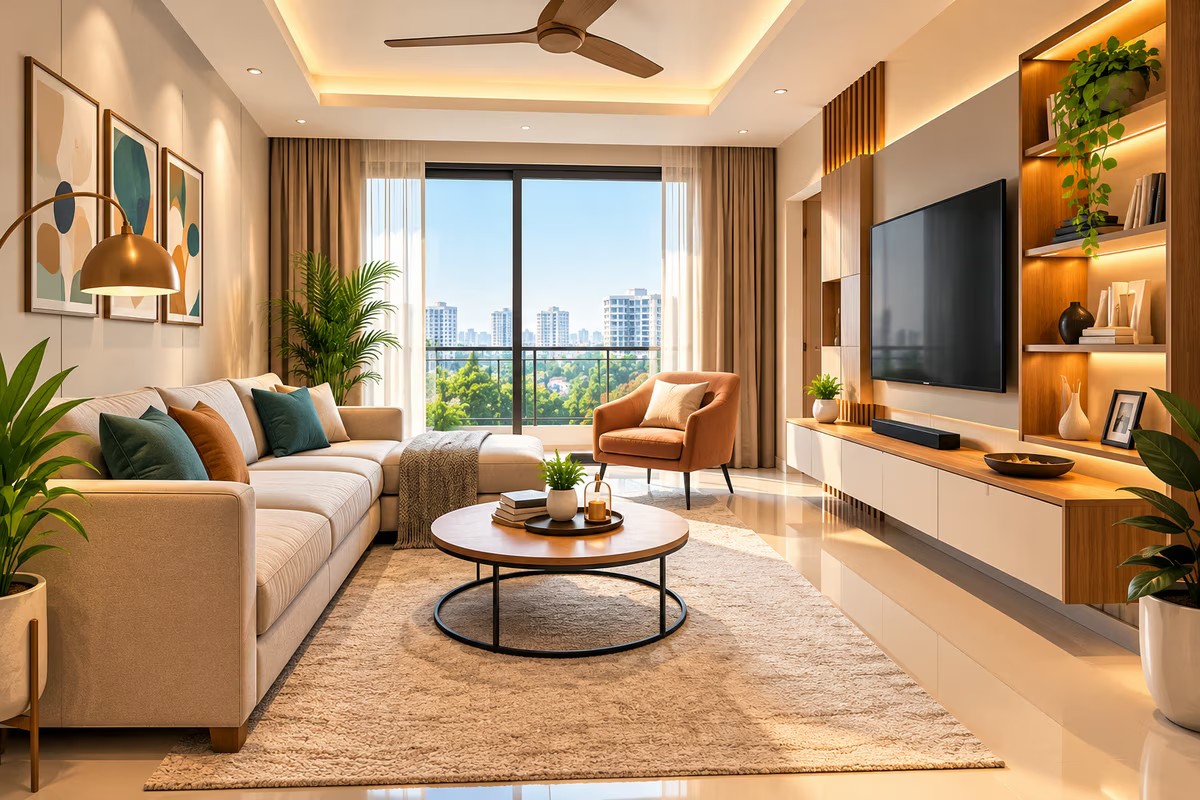
The living room is often the first space people notice when they enter a home, but its importance goes beyond first impressions. It is where family members spend time together, guests are welcomed, conversations happen and everyday activities often overlap. That makes the room one of the most important spaces to plan properly.
A successful living room does not need excessive decoration or expensive furniture. It needs a layout that works, enough storage to keep clutter under control, suitable lighting, comfortable furniture and finishes that work together. Good living room interior design starts by understanding how the space will actually be used rather than selecting furniture or colours first.
Begin with How the Room Will Be Used
Before choosing a sofa, TV unit or decorative wall, think about the activities the room needs to support.
A family that spends most evenings watching television may need a clear viewing position and comfortable seating. A household that frequently entertains guests may need more flexible seating and sufficient open space for movement. If the living room also connects directly to a dining area, the layout should allow both spaces to function without feeling crowded.
Consider these questions before planning the room:
- How many people normally use the space?
- How often do you entertain guests?
- Is the television a major feature of the room?
- Is additional storage required?
- Does the room connect to a balcony, dining area or passage?
- How much natural light enters during the day?
- Which furniture pieces are essential?
These answers provide a more useful starting point than simply choosing a style from a catalogue or online reference.
Get the Furniture Layout Right
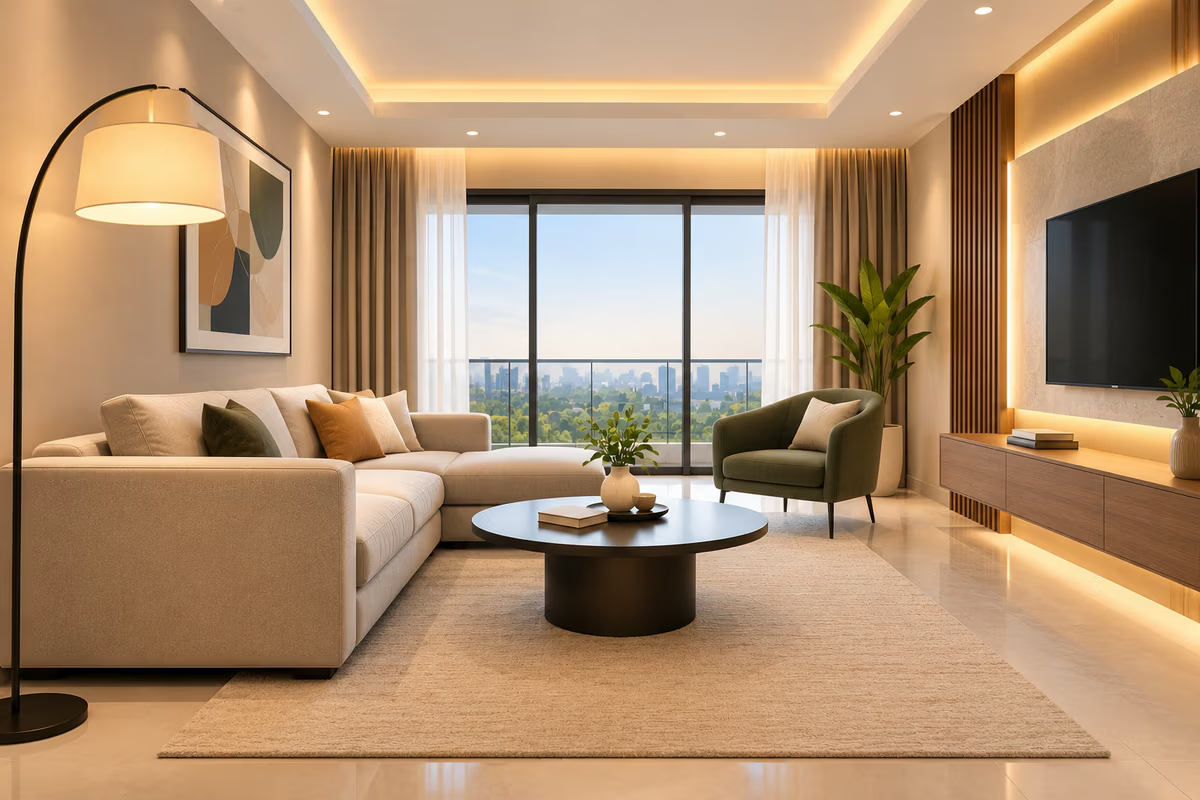
Furniture placement determines how comfortable and open a living room feels. Even attractive furniture can make a room difficult to use if the proportions are wrong or circulation is restricted.
Start with the largest furniture piece, usually the sofa. Its position should establish the main seating arrangement without blocking doors, windows or important movement paths. Additional chairs or a compact seating unit can then be positioned according to the available space.
The distance between seating and the centre table should also be practical. A table placed too far away becomes inconvenient, while one positioned too close restricts movement.
In a compact apartment, avoiding oversized furniture can make a noticeable difference. A smaller sofa with appropriately sized chairs may provide more usable space than a large sectional that dominates the room.
The same principle applies to the TV unit. Its dimensions should relate to the wall and the viewing distance rather than being selected independently.
Let the TV Unit Serve a Purpose
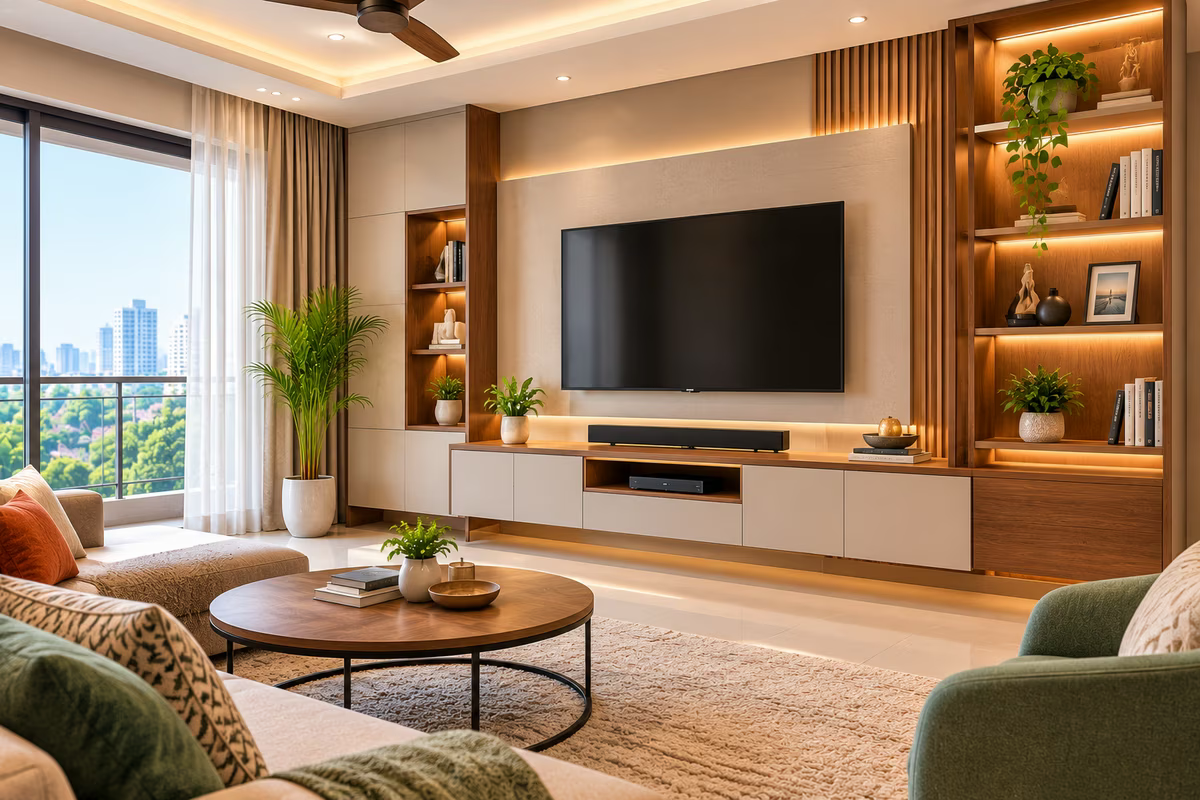
The TV wall often becomes a visual anchor in modern homes. However, it does not have to be treated only as a decorative feature.
A well-planned unit can combine the television with closed storage, open display areas and selected lighting. Closed cabinets can keep less frequently used items out of sight, while open shelves can be used selectively for books, photographs or decor.
The proportion of open and closed storage should depend on actual requirements. Too many open shelves can create a visually busy wall and require regular cleaning. Too many closed cabinets may make a smaller room feel heavy.
Wall finishes should also complement the unit rather than compete with it. A wood finish, textured surface, neutral panel or restrained colour can create enough visual interest without requiring several decorative treatments.
Make Storage Part of the Design
Storage is often overlooked when homeowners focus on appearance. However, inadequate storage can quickly affect how the living room looks and functions.
Think about the items that regularly occupy the room. Books, remotes, electronics, children's belongings, documents and other household items may all need a designated place.
Depending on the available space, storage can be incorporated into a TV unit, wall-mounted cabinet, console or selected shelving. The objective is to provide enough storage without filling every wall.
For smaller homes, vertical storage can make better use of available wall space. However, floor-to-ceiling furniture should be balanced with lighter areas so that the room does not feel enclosed.
A useful rule is simple: store what needs to be stored and display only what adds value to the room.
Use Lighting in Layers
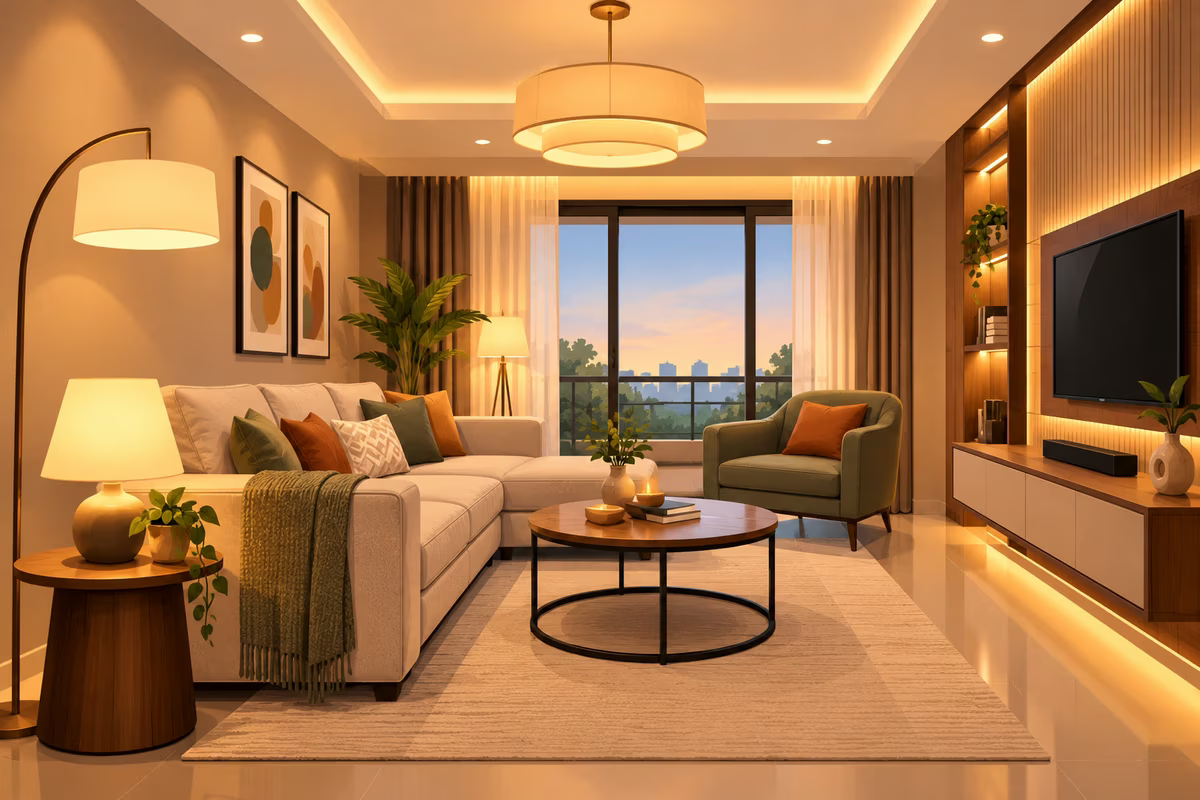
One light source rarely works equally well for every situation. A living room needs sufficient general illumination, but it should also allow the atmosphere to change depending on the activity and time of day.
A practical lighting plan can include:
- Ambient lighting: Provides general illumination across the room.
- Task lighting: Supports activities such as reading or working in a specific seating area.
- Accent lighting: Highlights selected architectural, display or decorative elements.
Natural light should also be considered while planning artificial lighting. Furniture placement, curtains and wall finishes can affect how daylight moves through the space.
Warm lighting is often suitable for evening use, but the exact lighting choice should be considered alongside the colours and materials already selected. Lighting should enhance the room rather than become an isolated decorative feature.
Choose Colours That Work Beyond the Trend
Colour trends change, but the basic requirements of a living room remain fairly consistent. The chosen palette should work with the room's size, natural light, flooring, furniture and other finishes.
Neutral colours can provide a flexible base, while a controlled accent colour can add character. For example, a neutral sofa can be paired with an accent chair, cushions, artwork or a feature wall without requiring the entire room to follow a strong colour scheme.
In a smaller living room, lighter shades can help maintain a sense of openness. Larger rooms can accommodate stronger contrast, provided the darker tones are balanced with suitable lighting and lighter surfaces.
Before finalising paint or large surface finishes, check samples in both natural and artificial light. Colours can appear noticeably different depending on the surrounding materials and lighting conditions.
Add Texture Instead of Adding More Decoration
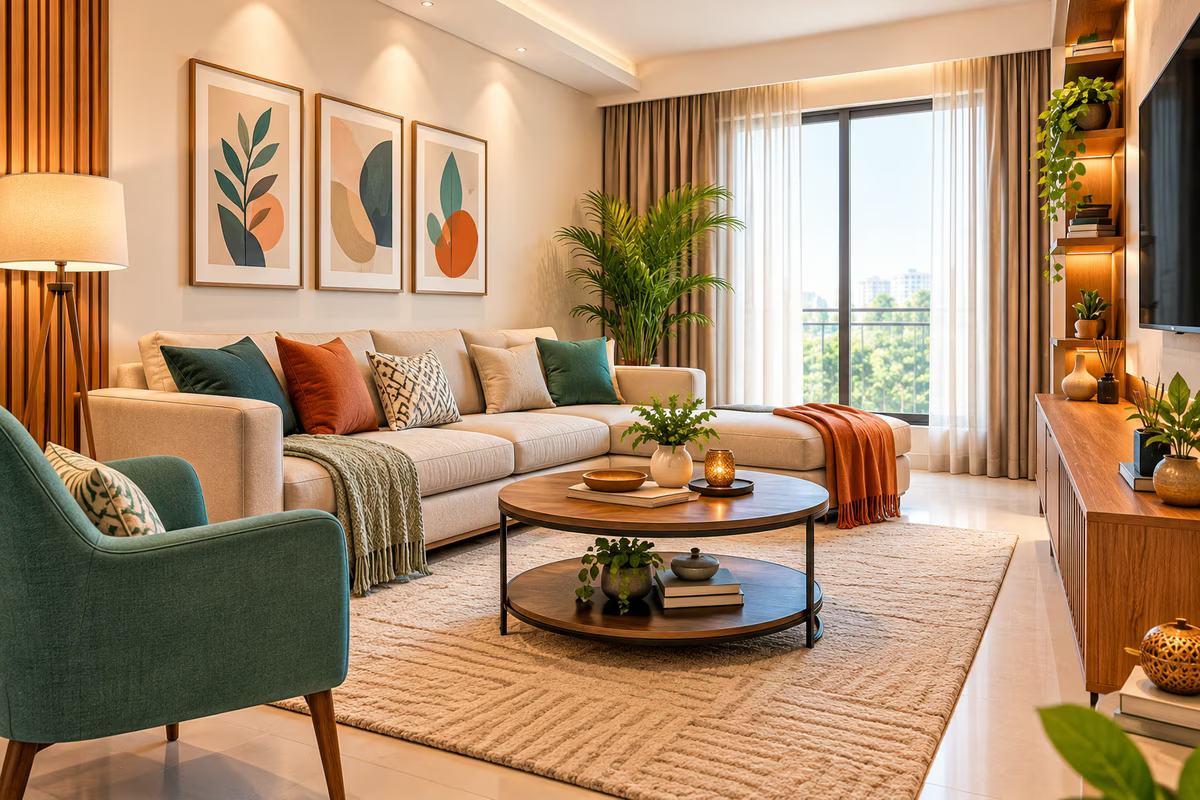
Character does not always come from more decorative objects. Texture can create visual depth without making the room feel crowded.
Wood, fabric, rugs, curtains, upholstery and selected wall finishes can introduce different textures into the same palette. A combination of smooth and textured surfaces often creates more visual interest than using several unrelated colours.
For example, a simple neutral living room can gain depth through a textured rug, upholstered seating, timber elements and carefully selected artwork. The result can feel complete without covering every available surface with decor.
This is particularly useful when developing living room ideas for apartments where visual clutter can quickly make the available space feel smaller.
Consider Materials for Maintenance as Well as Appearance
Materials should be selected according to how the room is used. A household with children or pets may have different requirements from a home used mainly by adults. Frequently touched surfaces need to be easy to clean, while upholstery should be selected with regular use in mind.
The same applies to storage hardware, cabinet finishes and other frequently operated components. A visually appealing finish is only useful if it can withstand the level of use expected from it.
Material selection should therefore consider three factors together:
- Appearance
- Durability
- Maintenance
Choosing materials this way can help avoid spending more later on replacements or repairs caused by unsuitable specifications.
Create a Modern Look Without Making the Room Generic
Modern living room designs do not have to follow a single formula. Clean lines, restrained colours and simple furniture can create a contemporary appearance, but personality still matters.
Instead of copying a complete reference image, identify the elements that appeal to you. It may be the colour combination, lighting, furniture proportions, wood finish or wall treatment. These elements can then be adapted to the actual dimensions and requirements of your room.
Current preferences such as natural-looking materials, warm neutrals, integrated storage, layered lighting and uncluttered layouts can work well when they are applied selectively. Trends should support the room rather than determine every decision.
Keep the Budget Focused on What Matters
The cost of a living room depends on its size, furniture, storage requirements, materials, lighting, finishes and overall scope. There is no single cost that applies to every project.
A practical budget should separate essential requirements from decorative additions. Prioritise furniture, storage, lighting and durable finishes before spending heavily on features that have limited functional value.
Before finalising the budget, check:
- Sofa and seating requirements
- TV unit and storage
- Lighting and electrical work
- Wall and ceiling treatments
- Flooring or other surface changes
- Curtains, rugs and upholstery
- Decorative elements
- Installation and execution requirements
Material substitutions can also affect the overall budget. If the preferred finish exceeds the planned amount, compare alternatives that provide a similar appearance or performance rather than changing several unrelated elements.
A clear scope at the beginning makes it easier to understand where money is being spent and where adjustments can be made.
A Simple Checklist Before Finalising the Room
Before execution begins, review the complete living room plan rather than approving individual elements separately.
Check the following:
- Is there enough space for comfortable movement?
- Are the sofa and other furniture correctly proportioned?
- Is the TV positioned appropriately?
- Does the storage meet actual household requirements?
- Are lighting positions suitable for furniture placement?
- Do the colours and materials work together?
- Are the selected finishes practical to maintain?
- Does the budget cover the complete planned scope?
- Have furniture dimensions and electrical requirements been checked?
At ASK Design and Build, this kind of practical planning is reflected in the way living spaces are considered around layout, natural light, storage, materials and everyday use rather than appearance alone.
Design the Room for Real Life
The strongest living room interior design does not come from adding the maximum number of features. It comes from making the right decisions for the people who use the room.
A comfortable sofa, sensible circulation, useful storage, suitable lighting and a coordinated material palette can have a greater impact than an elaborate decorative scheme. When these elements are planned together, the living room can feel organised without becoming rigid, modern without becoming impersonal and attractive without becoming difficult to maintain.
The best living room is ultimately one that works naturally every day. It should accommodate conversations, family time, guests, relaxation and changing needs without requiring constant adjustment. That balance between appearance and practical use is what gives a living space lasting character and purpose.